
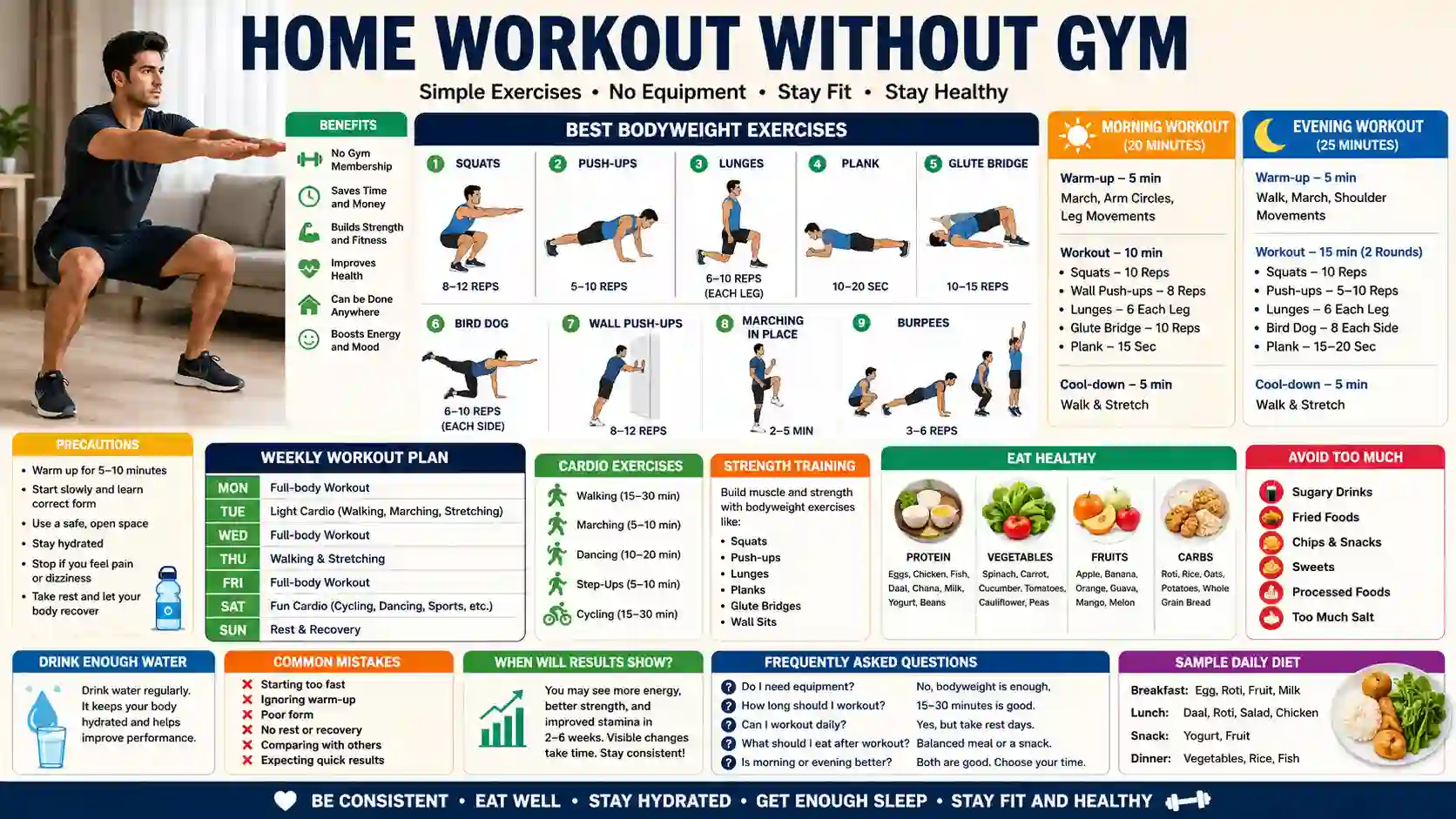
No gym? No problem! Your home can be a great place to start a simple workout routine. With easy exercises and a little time each day, you can stay active without expensive equipment. Follow this easy weekly plan and make exercise a simple part of your day
Why Home Workouts Are Important
You do not need a gym to stay active. You can get a good workout at home with little or no equipment.
A home workout without gym is easy to fit into your day. You can exercise in your room, living room, garden, or another safe place.
Simple exercises can help improve strength, balance, fitness, and energy. You can start with easy movements and improve over time.
The goal is to stay active and healthy. You do not need to push yourself too hard.
Benefits of Working Out at Home
Home workouts have many benefits.
- You do not need a gym membership.
- You can save time and money.
- You can exercise at a time that suits you.
- You can use your own body weight.
- You can build strength and fitness.
- You can improve balance and movement.
- You can take short exercise breaks during the day.
- You can choose exercises that match your fitness level.
You also have more control over your workout. You can slow down or take a break when needed.
Precautions to Take Before Starting
Safety should always come first.
Before you start:
- Choose a safe and open space.
- Wear comfortable clothes and suitable shoes.
- Keep water nearby.
- Warm up for 5–10 minutes.
- Start with easy exercises.
- Learn the correct form.
- Take short breaks when needed.
- Stop if you feel sharp pain or become dizzy.
- Give your body time to rest.
Do not try to copy difficult workouts from social media. Start at your own level.
If you have an injury or health concern, ask a qualified healthcare professional before starting a new exercise plan.
Best Bodyweight Exercises Without Equipment
You can do many exercises at home without equipment. Start slowly and focus on good form.
1. Squats
Stand with your feet about shoulder-width apart. Bend your knees and lower your body. Then stand up again.
Do: 8–12 repetitions
Squats work your legs and hips.
2. Wall Push-Ups
Stand in front of a wall. Place your hands on the wall. Bend your elbows and move toward the wall. Then push yourself back.
Do: 8–12 repetitions
This is a good exercise for beginners.
3. Push-Ups
Place your hands on the floor. Keep your body controlled. Lower your chest and push back up.
Do: 5–10 repetitions
If regular push-ups are too hard, try wall or incline push-ups.
4. Lunges
Step one foot forward. Bend both knees in a controlled way. Return to the starting position. Then change legs.
Do: 6–10 repetitions per leg
Lunges help strengthen your legs and improve balance.
5. Plank
Place your forearms on the floor. Keep your body in a comfortable straight position.
Hold: 10–20 seconds
Beginners can keep their knees on the floor.
6. Glute Bridge
Lie on your back with your knees bent. Keep your feet on the floor. Lift your hips slowly. Then lower them.
Do: 10–15 repetitions
This exercise works your hips and legs.
7. Bird Dog
Start on your hands and knees. Extend one arm and the opposite leg. Bring them back and switch sides.
Do: 6–10 repetitions per side
This exercise helps improve balance and body control.
8. Marching in Place
Stand tall and march in one spot. Move your arms naturally.
Do: 2–5 minutes
It is a simple way to warm up or add light cardio.
9. Burpees
Burpees are more challenging.
Beginners: 3–6 repetitions
Move slowly and focus on safe form. If burpees feel too hard, choose marching or another easy cardio exercise.
Morning Workout Schedule
You do not need a long workout in the morning.
20-Minute Morning Workout
Warm-up: 5 minutes
- March in place
- Arm circles
- Easy leg movements
Main workout: 10 minutes
- Squats: 10 reps
- Wall push-ups: 8 reps
- Lunges: 6 reps per leg
- Glute bridges: 10 reps
- Plank: 15 seconds
Take a short rest between exercises.
Cool-down: 5 minutes
Walk slowly and do gentle stretches.
A short morning workout can help you start your day with movement and energy.
Evening Workout Schedule
An evening workout is a good choice if you are busy in the morning.
25-Minute Evening Workout
Warm-up: 5 minutes
- Easy walking
- Marching
- Shoulder movements
Main workout: 15 minutes
Complete two rounds:
- Squats: 10 reps
- Push-ups: 5–10 reps
- Lunges: 6 reps per leg
- Bird dog: 8 reps per side
- Plank: 15–20 seconds
Cool-down: 5 minutes
Walk slowly and stretch gently.
You do not need a hard workout every evening. Rest is also important.
Complete Weekly Workout Plan
Use this simple seven-day plan.
DayWorkoutMondayFull-body workoutTuesdayLight cardioWednesdayFull-body workoutThursdayWalking and stretchingFridayFull-body workoutSaturdayFun cardio activitySundayRest
Monday
- Squats: 10–12 reps
- Wall or incline push-ups: 8–12 reps
- Lunges: 6–10 per leg
- Glute bridges: 10–15 reps
- Plank: 15–20 seconds
Complete 1–2 rounds.
Tuesday
- Marching: 5 minutes
- Walking: 10–20 minutes
- Gentle stretching: 5 minutes
Wednesday
Repeat Monday’s workout.
Focus on good form. Do not rush.
Thursday
Keep the workout light.
- Walking: 15–20 minutes
- Gentle stretching: 5–10 minutes
Friday
Do another full-body workout.
Saturday
Choose an activity you enjoy.
You can:
- Walk
- Cycle
- Dance
- Play a sport
- Walk up and down safe stairs
Sunday
Take a rest day.
Your body needs rest to recover.
Cardio Exercises for Weight Loss
Cardio exercises make your heart and breathing work harder. They can improve fitness and stamina.
Good home cardio exercises include:
Walking
Walk at a comfortable pace.
Time: 15–30 minutes
Marching
March in place and move your arms.
Time: 5–10 minutes
Dancing
Dance in a safe, open space.
Time: 10–20 minutes
Step-Ups
Use a stable, low step. Step up and down slowly.
Time: 5–10 minutes
Cycling
Cycling is another good cardio activity.
Time: 15–30 minutes
Choose an activity you enjoy. You are more likely to keep doing it.
Strength Training for Building Muscle
You do not need gym machines to build strength.
Bodyweight exercises can help train many muscle groups.
Try:
- Squats
- Push-ups
- Lunges
- Glute bridges
- Planks
- Wall sits
- Bird dogs
Start with a few repetitions. Focus on good form.
As you get stronger, you can slowly increase the difficulty. Do not make big changes too quickly.
For teenagers, the main goal should be healthy movement and strength. Do not focus on changing your body size or appearance.
What Diet to Follow Alongside Exercise
Your body needs good food for energy and growth. You do not need a strict diet.
Try to eat different types of healthy foods.
Protein
Protein helps your body grow and repair muscles.
Good local choices include:
- Eggs
- Milk
- Yogurt or dahi
- Chicken
- Fish
- Daal
- Chana
- Beans
- Peas
Vegetables
Try to include vegetables such as:
- Spinach
- Carrots
- Cucumber
- Tomatoes
- Cauliflower
- Peas
- Okra
- Seasonal vegetables
Fruits
Choose fresh seasonal fruits.
Examples include:
- Apples
- Bananas
- Oranges
- Guava
- Mangoes
- Melons
- Pomegranate
Healthy Carbohydrates
Carbohydrates give your body energy.
Good choices include:
- Whole-wheat roti
- Oats
- Rice
- Whole-grain bread
- Potatoes
A simple Pakistani meal can include roti, daal, vegetables, yogurt, and salad.
Another option is rice with chicken or beans and vegetables.
Try to eat balanced meals instead of following strict food rules.
What Foods to Avoid
You do not need to completely avoid your favorite foods.
However, try not to have too much:
- Soft drinks
- Sugary drinks
- Chips
- Deep-fried foods
- Sweets
- Very salty snacks
- Highly processed foods
These foods are fine as occasional treats. They should not replace healthy meals.
Importance and Recommended Amount of Water Intake
Water helps your body work properly. You may need more water when you exercise or when the weather is hot.
Drink water regularly during the day. Drink when you feel thirsty.
Keep a bottle of water with you during exercise.
You may need more fluids after sweating. Water is usually the best choice for normal home workouts.
Common Mistakes People Make While Working Out at Home
Starting Too Fast
Do not begin with a very hard workout. Start slowly.
Using Poor Form
Good form is more important than doing many repetitions.
Skipping Warm-Ups
A warm-up prepares your body for exercise.
Not Taking Rest
Your body needs time to recover.
Comparing Yourself With Others
Everyone has a different fitness level. Focus on your own progress.
Expecting Fast Results
Fitness takes time. Stay consistent.
Not Getting Enough Sleep
Sleep helps your body recover and gives you energy for the next day.
When Will Results Start Showing?
Everyone is different. There is no exact time when results will appear.
You may notice changes in your fitness before you notice physical changes.
For example, you may find that:
- Exercises feel easier.
- You have better stamina.
- Your balance improves.
- Your movements become easier.
- You have more energy.
Do not worry if progress feels slow. Small improvements matter.
The goal is to build healthy habits that you can maintain.
Frequently Asked Questions (FAQs)
Can I work out at home without equipment?
Yes. Squats, lunges, push-ups, planks, and glute bridges can all be done without equipment.
How long should a home workout be?
Beginners can start with 15–30 minutes. You can adjust the time based on your fitness level.
Can home workouts build strength?
Yes. Bodyweight exercises can help improve strength when done regularly.
Is morning or evening exercise better?
Both can work. Choose the time that fits your routine.
Do I need weights?
No. You can start with bodyweight exercises.
Can I exercise every day?
You can stay active every day, but you do not need a hard workout every day. Include light activity and rest days.
What should I eat after exercise?
A normal balanced meal or snack can work well. Examples include yogurt with fruit, an egg with roti, or daal with rice.
Should I drink water during exercise?
Yes. Keep water nearby and drink when you are thirsty.
Can beginners do push-ups?
Yes. Start with wall push-ups or incline push-ups. Move to regular push-ups as you become stronger.
What is the most important part of a home workout?
Consistency is important. Good form, rest, sleep, and balanced meals also matter.
Short Weekly Diet Plan
This is a simple example of balanced meals.
DayBreakfastLunchSnackDinnerMondayEgg, roti, fruitDaal, roti, saladYogurt, fruitChicken, vegetables, rotiTuesdayOats, milk, bananaChana, roti, saladFruit, yogurtFish, rice, vegetablesWednesdayEgg, roti, fruitChicken, vegetables, rotiMilk, fruitDaal, rice, saladThursdayYogurt, oats, fruitBeans, roti, vegetablesBanana or guavaChicken, roti, saladFridayEgg, roti, milkDaal, rice, vegetablesYogurt, fruitFish or chicken, vegetablesSaturdayOats, milk, fruitChana, roti, saladSeasonal fruitDaal, vegetables, rotiSundayEgg, roti, fruitChicken or beans, rice, vegetablesYogurt, fruitDaal, roti, salad
You can change these foods based on what your family eats and what is available.
Conclusion
A home workout without gym can help you stay active without expensive equipment.
Start with simple exercises. Squats, push-ups, lunges, planks, walking, and marching are good choices.
Do not try to do too much at once. Focus on good form and regular exercise. Take rest days and drink enough water.
Eat balanced meals with foods such as eggs, daal, chicken, vegetables, fruits, roti, rice, and yogurt.
Most importantly, be patient. Healthy fitness takes time. Small steps can lead to strong and lasting habits.
Home Workout Without Gym: Easy Exercises and Weekly Plan
Why Home Workouts Are Important
You do not need a gym to stay active. You can get a good workout at home with little or no equipment.
A home workout without gym is easy to fit into your day. You can exercise in your room, living room, garden, or another safe place.
Simple exercises can help improve strength, balance, fitness, and energy. You can start with easy movements and improve over time.
The goal is to stay active and healthy. You do not need to push yourself too hard.
Benefits of Working Out at Home
Home workouts have many benefits.
- You do not need a gym membership.
- You can save time and money.
- You can exercise at a time that suits you.
- You can use your own body weight.
- You can build strength and fitness.
- You can improve balance and movement.
- You can take short exercise breaks during the day.
- You can choose exercises that match your fitness level.
You also have more control over your workout. You can slow down or take a break when needed.
Precautions to Take Before Starting
Safety should always come first.
Before you start:
- Choose a safe and open space.
- Wear comfortable clothes and suitable shoes.
- Keep water nearby.
- Warm up for 5–10 minutes.
- Start with easy exercises.
- Learn the correct form.
- Take short breaks when needed.
- Stop if you feel sharp pain or become dizzy.
- Give your body time to rest.
Do not try to copy difficult workouts from social media. Start at your own level.
If you have an injury or health concern, ask a qualified healthcare professional before starting a new exercise plan.
Best Bodyweight Exercises Without Equipment
You can do many exercises at home without equipment. Start slowly and focus on good form.
1. Squats
Stand with your feet about shoulder-width apart. Bend your knees and lower your body. Then stand up again.
Do: 8–12 repetitions
Squats work your legs and hips.
2. Wall Push-Ups
Stand in front of a wall. Place your hands on the wall. Bend your elbows and move toward the wall. Then push yourself back.
Do: 8–12 repetitions
This is a good exercise for beginners.
3. Push-Ups
Place your hands on the floor. Keep your body controlled. Lower your chest and push back up.
Do: 5–10 repetitions
If regular push-ups are too hard, try wall or incline push-ups.
4. Lunges
Step one foot forward. Bend both knees in a controlled way. Return to the starting position. Then change legs.
Do: 6–10 repetitions per leg
Lunges help strengthen your legs and improve balance.
5. Plank
Place your forearms on the floor. Keep your body in a comfortable straight position.
Hold: 10–20 seconds
Beginners can keep their knees on the floor.
6. Glute Bridge
Lie on your back with your knees bent. Keep your feet on the floor. Lift your hips slowly. Then lower them.
Do: 10–15 repetitions
This exercise works your hips and legs.
7. Bird Dog
Start on your hands and knees. Extend one arm and the opposite leg. Bring them back and switch sides.
Do: 6–10 repetitions per side
This exercise helps improve balance and body control.
8. Marching in Place
Stand tall and march in one spot. Move your arms naturally.
Do: 2–5 minutes
It is a simple way to warm up or add light cardio.
9. Burpees
Burpees are more challenging.
Beginners: 3–6 repetitions
Move slowly and focus on safe form. If burpees feel too hard, choose marching or another easy cardio exercise.
Morning Workout Schedule
You do not need a long workout in the morning.
20-Minute Morning Workout
Warm-up: 5 minutes
- March in place
- Arm circles
- Easy leg movements
Main workout: 10 minutes
- Squats: 10 reps
- Wall push-ups: 8 reps
- Lunges: 6 reps per leg
- Glute bridges: 10 reps
- Plank: 15 seconds
Take a short rest between exercises.
Cool-down: 5 minutes
Walk slowly and do gentle stretches.
A short morning workout can help you start your day with movement and energy.
Evening Workout Schedule
An evening workout is a good choice if you are busy in the morning.
25-Minute Evening Workout
Warm-up: 5 minutes
- Easy walking
- Marching
- Shoulder movements
Main workout: 15 minutes
Complete two rounds:
- Squats: 10 reps
- Push-ups: 5–10 reps
- Lunges: 6 reps per leg
- Bird dog: 8 reps per side
- Plank: 15–20 seconds
Cool-down: 5 minutes
Walk slowly and stretch gently.
You do not need a hard workout every evening. Rest is also important.
Complete Weekly Workout Plan
Use this simple seven-day plan.
DayWorkoutMondayFull-body workoutTuesdayLight cardioWednesdayFull-body workoutThursdayWalking and stretchingFridayFull-body workoutSaturdayFun cardio activitySundayRest
Monday
- Squats: 10–12 reps
- Wall or incline push-ups: 8–12 reps
- Lunges: 6–10 per leg
- Glute bridges: 10–15 reps
- Plank: 15–20 seconds
Complete 1–2 rounds.
Tuesday
- Marching: 5 minutes
- Walking: 10–20 minutes
- Gentle stretching: 5 minutes
Wednesday
Repeat Monday’s workout.
Focus on good form. Do not rush.
Thursday
Keep the workout light.
- Walking: 15–20 minutes
- Gentle stretching: 5–10 minutes
Friday
Do another full-body workout.
Saturday
Choose an activity you enjoy.
You can:
- Walk
- Cycle
- Dance
- Play a sport
- Walk up and down safe stairs
Sunday
Take a rest day.
Your body needs rest to recover.
Cardio Exercises for Weight Loss
Cardio exercises make your heart and breathing work harder. They can improve fitness and stamina.
Good home cardio exercises include:
Walking
Walk at a comfortable pace.
Time: 15–30 minutes
Marching
March in place and move your arms.
Time: 5–10 minutes
Dancing
Dance in a safe, open space.
Time: 10–20 minutes
Step-Ups
Use a stable, low step. Step up and down slowly.
Time: 5–10 minutes
Cycling
Cycling is another good cardio activity.
Time: 15–30 minutes
Choose an activity you enjoy. You are more likely to keep doing it.
Strength Training for Building Muscle
You do not need gym machines to build strength.
Bodyweight exercises can help train many muscle groups.
Try:
- Squats
- Push-ups
- Lunges
- Glute bridges
- Planks
- Wall sits
- Bird dogs
Start with a few repetitions. Focus on good form.
As you get stronger, you can slowly increase the difficulty. Do not make big changes too quickly.
For teenagers, the main goal should be healthy movement and strength. Do not focus on changing your body size or appearance.
What Diet to Follow Alongside Exercise
Your body needs good food for energy and growth. You do not need a strict diet.
Try to eat different types of healthy foods.
Protein
Protein helps your body grow and repair muscles.
Good local choices include:
- Eggs
- Milk
- Yogurt or dahi
- Chicken
- Fish
- Daal
- Chana
- Beans
- Peas
Vegetables
Try to include vegetables such as:
- Spinach
- Carrots
- Cucumber
- Tomatoes
- Cauliflower
- Peas
- Okra
- Seasonal vegetables
Fruits
Choose fresh seasonal fruits.
Examples include:
- Apples
- Bananas
- Oranges
- Guava
- Mangoes
- Melons
- Pomegranate
Healthy Carbohydrates
Carbohydrates give your body energy.
Good choices include:
- Whole-wheat roti
- Oats
- Rice
- Whole-grain bread
- Potatoes
A simple Pakistani meal can include roti, daal, vegetables, yogurt, and salad.
Another option is rice with chicken or beans and vegetables.
Try to eat balanced meals instead of following strict food rules.
What Foods to Avoid
You do not need to completely avoid your favorite foods.
However, try not to have too much:
- Soft drinks
- Sugary drinks
- Chips
- Deep-fried foods
- Sweets
- Very salty snacks
- Highly processed foods
These foods are fine as occasional treats. They should not replace healthy meals.
Importance and Recommended Amount of Water Intake
Water helps your body work properly. You may need more water when you exercise or when the weather is hot.
Drink water regularly during the day. Drink when you feel thirsty.
Keep a bottle of water with you during exercise.
You may need more fluids after sweating. Water is usually the best choice for normal home workouts.
Common Mistakes People Make While Working Out at Home
Starting Too Fast
Do not begin with a very hard workout. Start slowly.
Using Poor Form
Good form is more important than doing many repetitions.
Skipping Warm-Ups
A warm-up prepares your body for exercise.
Not Taking Rest
Your body needs time to recover.
Comparing Yourself With Others
Everyone has a different fitness level. Focus on your own progress.
Expecting Fast Results
Fitness takes time. Stay consistent.
Not Getting Enough Sleep
Sleep helps your body recover and gives you energy for the next day.
When Will Results Start Showing?
Everyone is different. There is no exact time when results will appear.
You may notice changes in your fitness before you notice physical changes.
For example, you may find that:
- Exercises feel easier.
- You have better stamina.
- Your balance improves.
- Your movements become easier.
- You have more energy.
Do not worry if progress feels slow. Small improvements matter.
The goal is to build healthy habits that you can maintain.
Frequently Asked Questions (FAQs)
Can I work out at home without equipment?
Yes. Squats, lunges, push-ups, planks, and glute bridges can all be done without equipment.
How long should a home workout be?
Beginners can start with 15–30 minutes. You can adjust the time based on your fitness level.
Can home workouts build strength?
Yes. Bodyweight exercises can help improve strength when done regularly.
Is morning or evening exercise better?
Both can work. Choose the time that fits your routine.
Do I need weights?
No. You can start with bodyweight exercises.
Can I exercise every day?
You can stay active every day, but you do not need a hard workout every day. Include light activity and rest days.
What should I eat after exercise?
A normal balanced meal or snack can work well. Examples include yogurt with fruit, an egg with roti, or daal with rice.
Should I drink water during exercise?
Yes. Keep water nearby and drink when you are thirsty.
Can beginners do push-ups?
Yes. Start with wall push-ups or incline push-ups. Move to regular push-ups as you become stronger.
What is the most important part of a home workout?
Consistency is important. Good form, rest, sleep, and balanced meals also matter.
Short Weekly Diet Plan
This is a simple example of balanced meals.
DayBreakfastLunchSnackDinnerMondayEgg, roti, fruitDaal, roti, saladYogurt, fruitChicken, vegetables, rotiTuesdayOats, milk, bananaChana, roti, saladFruit, yogurtFish, rice, vegetablesWednesdayEgg, roti, fruitChicken, vegetables, rotiMilk, fruitDaal, rice, saladThursdayYogurt, oats, fruitBeans, roti, vegetablesBanana or guavaChicken, roti, saladFridayEgg, roti, milkDaal, rice, vegetablesYogurt, fruitFish or chicken, vegetablesSaturdayOats, milk, fruitChana, roti, saladSeasonal fruitDaal, vegetables, rotiSundayEgg, roti, fruitChicken or beans, rice, vegetablesYogurt, fruitDaal, roti, salad
You can change these foods based on what your family eats and what is available.
Conclusion
A home workout without gym can help you stay active without expensive equipment.
Start with simple exercises. Squats, push-ups, lunges, planks, walking, and marching are good choices.
Do not try to do too much at once. Focus on good form and regular exercise. Take rest days and drink enough water.
Eat balanced meals with foods such as eggs, daal, chicken, vegetables, fruits, roti, rice, and yogurt.
Most importantly, be patient. Healthy fitness takes time. Small steps can lead to strong and lasting habits.