Have you ever written the word skeptical and then wondered if it should be sceptical instead? You’re not alone.
This spelling pair causes confusion for writers, students, journalists, and ESL learners around the world.
People search for sceptical or skeptical because both spellings appear correct, both are used by trusted sources, and both show up in news articles, books, and online discussions.
The confusion comes from regional English rules.
British English and American English often spell the same word differently, especially words with Greek roots.
When you’re writing for an exam, a website, or a professional audience, choosing the wrong spelling can make your writing look inconsistent or careless—even when your meaning is clear.
This article clears up the confusion step by step.
You’ll get a quick answer, learn where the word comes from, understand British vs American spelling rules, see real-life examples, and know exactly which spelling to use for your audience.
By the end, choosing between sceptical or skeptical will be simple and stress-free.
Sceptical or Skeptical – Quick Answer
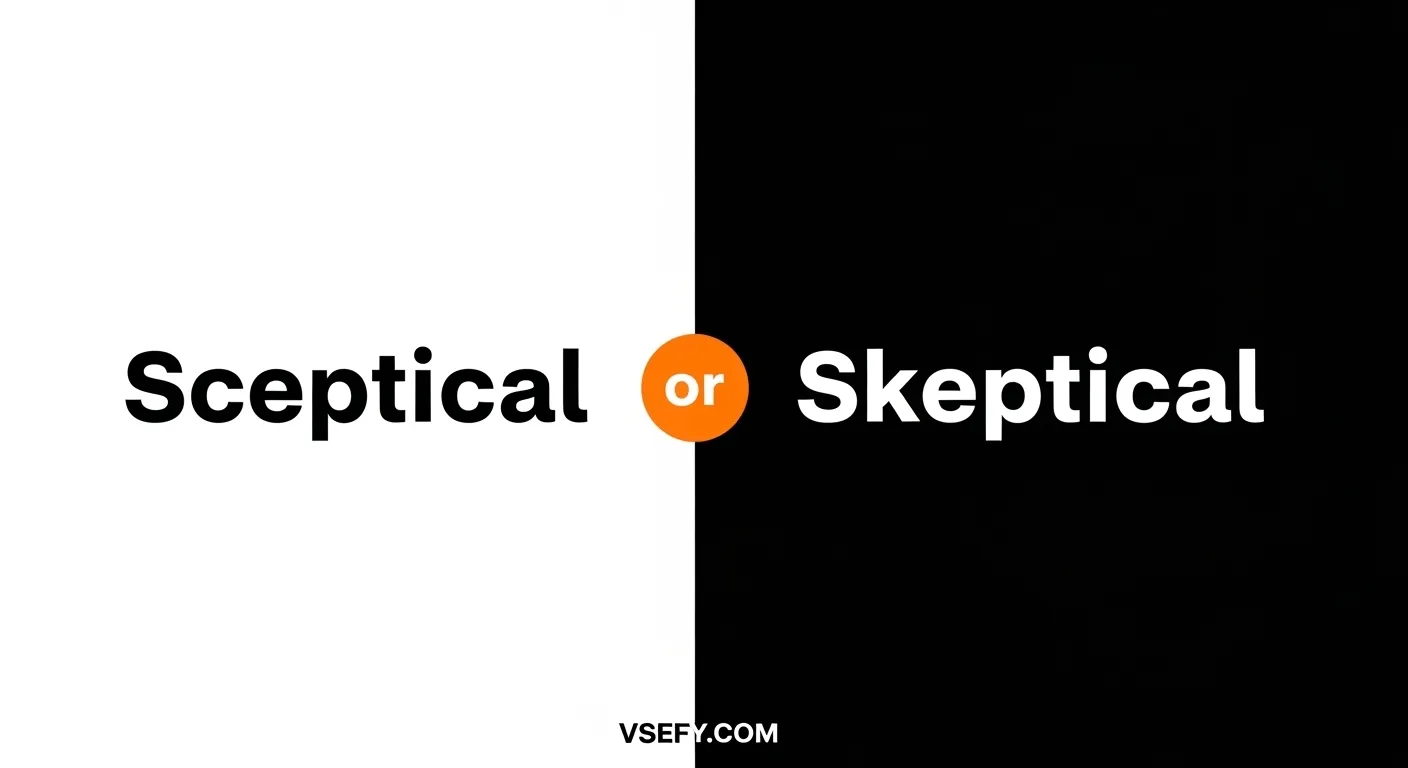
Both sceptical and skeptical are correct.
The spelling depends on the type of English you use.
- Skeptical → American English (US)
- Sceptical → British English (UK, Commonwealth)
Simple Examples:
- US English:
She was skeptical about the new plan. - UK English:
He remained sceptical of the proposal.
Both spellings mean the same thing: having doubts or not easily convinced.
The Origin of Sceptical or Skeptical
The word comes from the Greek skeptikos, meaning to examine or to consider carefully. It entered Latin and later French before becoming part of English.
In early English, many words with Greek roots kept the sk sound. Over time, British English began spelling some of these words with sc, while American English kept the sk spelling to stay closer to the original Greek form.
This is why:
- British English uses sceptical
- American English uses skeptical
Both spellings reflect the same origin and meaning. The difference is historical, not grammatical.
British English vs American English Spelling
The difference between sceptical or skeptical follows a clear regional pattern.
The Rule:
- British English: prefers sc
- American English: prefers sk
Similar Word Pairs:
- Sceptic (UK) / Skeptic (US)
- Scepticism (UK) / Skepticism (US)
Comparison Table
| Feature | British English | American English |
| Preferred spelling | sceptical | skeptical |
| Root spelling | sc | sk |
| Common regions | UK, Australia, NZ | United States |
| Meaning | Same | Same |
| Formal writing | Yes | Yes |
Which Spelling Should You Use?
The correct spelling depends on your audience.
Use Skeptical if:
- You write for a US audience
- You follow American English style guides
- You write for US media, business, or education
Use Sceptical if:
- You write for a UK or Commonwealth audience
- You follow British English conventions
- You write academic or formal British English
Writing for a Global Audience?
- Choose one spelling
- Stay consistent
- Match your website or brand language
Consistency builds trust and clarity.
Common Mistakes with Sceptical vs Skeptical
This keyword causes frequent errors.
1. Mixing spellings
❌ She was sceptical at first but later skeptical.
✔️ Use one spelling style.
2. Thinking one spelling is wrong
❌ Sceptical is incorrect English.
✔️ It is correct in British English.
3. Confusing related words
❌ He is a sceptic with strong skepticism.
✔️ Match spelling: sceptic / scepticism (UK) or skeptic / skepticism (US).
4. Inconsistent tone
❌ Switching spellings in the same article
✔️ Pick one system and follow it throughout.
Skeptical or Sceptical in Everyday Examples
Emails
- I am skeptical about the deadline. (US)
- She is sceptical of the results. (UK)
News
- Experts remain skeptical of the claims.
- Voters were sceptical about the policy.
Social Media
- Still skeptical about this update.
- Feeling sceptical but hopeful.
Formal Writing
- Researchers are skeptical of the findings.
- The committee remained sceptical throughout.
Sceptical or Skeptical – Google Trends & Usage Data
Search interest in sceptical or skeptical is steady worldwide, especially in:
- News and journalism
- Academic writing
- Opinion pieces
- ESL learning
Regional Usage:
- United States: skeptical dominates
- United Kingdom: sceptical is preferred
- Australia & New Zealand: British-style spelling common
- Global searches: Both spellings searched together
This shows that users want clarity on spelling, not meaning.
Sceptical vs Skeptical – Comparison Table
| Variation | Correct? | Region | Example |
| sceptical | Yes | UK | A sceptical response |
| sceptic | Yes | UK | She is a sceptic |
| scepticism | Yes | UK | Healthy scepticism |
| skeptical | Yes | US | A skeptical view |
| skeptic | Yes | US | He is a skeptic |
| skepticism | Yes | US | Scientific skepticism |
FAQs
1. Is sceptical correct?
Yes. It is correct British English.
2. Is skeptical American English?
Yes. It is the standard US spelling.
3. Do they mean different things?
No. The meaning is the same.
4. Which spelling is older?
Both have long histories, but skeptical is closer to the Greek root.
5. Can I mix both spellings?
No. Use one spelling consistently.
6. Which spelling is better for SEO?
Use the spelling your target audience searches for most.
7. Is one more formal than the other?
No. Both are equally formal in their regions.
Conclusion
The difference between sceptical or skeptical is not about meaning or correctness it’s about regional spelling rules.
British English prefers sceptical, while American English uses skeptical. Both forms are correct, professional, and widely accepted.
To write clearly and confidently, always match your spelling to your audience and stay consistent throughout your content.
This is especially important in journalism, academic writing, and professional communication.
Once you understand the regional rule, choosing the right spelling becomes easy.
Whether you’re sceptical or skeptical, you’re using correct English when you use the right form for the right readers.

I’m Rachel Amphlett, a content writer specializing in English grammar, vocabulary, and common language mistakes, with a focus on clarity and accuracy.